 Green logo_transparent background_blackfont.webp)
About Wakaf
Supporting the Muslim community through dedication in perpetuity of assets capital for pious, religious or charitable purposes.
Last updated 28 November 2025
What is Wakaf?
Under Singapore law, a wakaf is a permanent dedication by a Muslim of any movable or immovable property for any purpose recognised by the Muslim law as pious, religious or charitable (section 2 of the Administration of Muslim Law Act 1966("AMLA")).
A wakaf consists of four pillars: a donor (the wakif), a declaration (sighah) of intent on creating the wakaf, the assets (mauquf) and the beneficiaries of the wakaf (muquf’alaih).
The ownership of the donated assets is transferred to Allah s.w.t., and cannot be sold, given away or inherited by anyone until the end of time.
Under AMLA, the legal ownership of all wakaf assets automatically vests in MUIS, which is the trustee-equivalent for wakaf.
Only the income generated from the wakaf asset(s) can be distributed to the beneficiaries (muquf’alaih). The mauquf or the capital must be kept intact.
Once the wakaf is created and is in effect, MUIS can appoint a mutawalli to manage the wakaf.
Conditions of Wakaf
A wakaf is valid when the wakif:
Stated his intention to create or contribute to a wakaf
Declare that the wakaf in perpetuity and not for a limited period only
Accept that it is irreversible, meaning that the wakif cannot ask for its ownership back, or make changes to the muquf’alaih.
The above should be in written form via a deed or a will.
In addition, the asset that is intended for the wakaf has to be fully owned by the wakif.
History of Wakaf in Singapore
Wakaf is one of the oldest institutions within the Singapore Muslim community. Our forefathers left this important legacy because they aspired to see progress and wanted to spread good beyond their lifetimes. Singapore continues to benefit from the heritage wakaf assets left behind by three main groups of wakifs: Arab merchants, Indian traders, and Nusantara landowners.
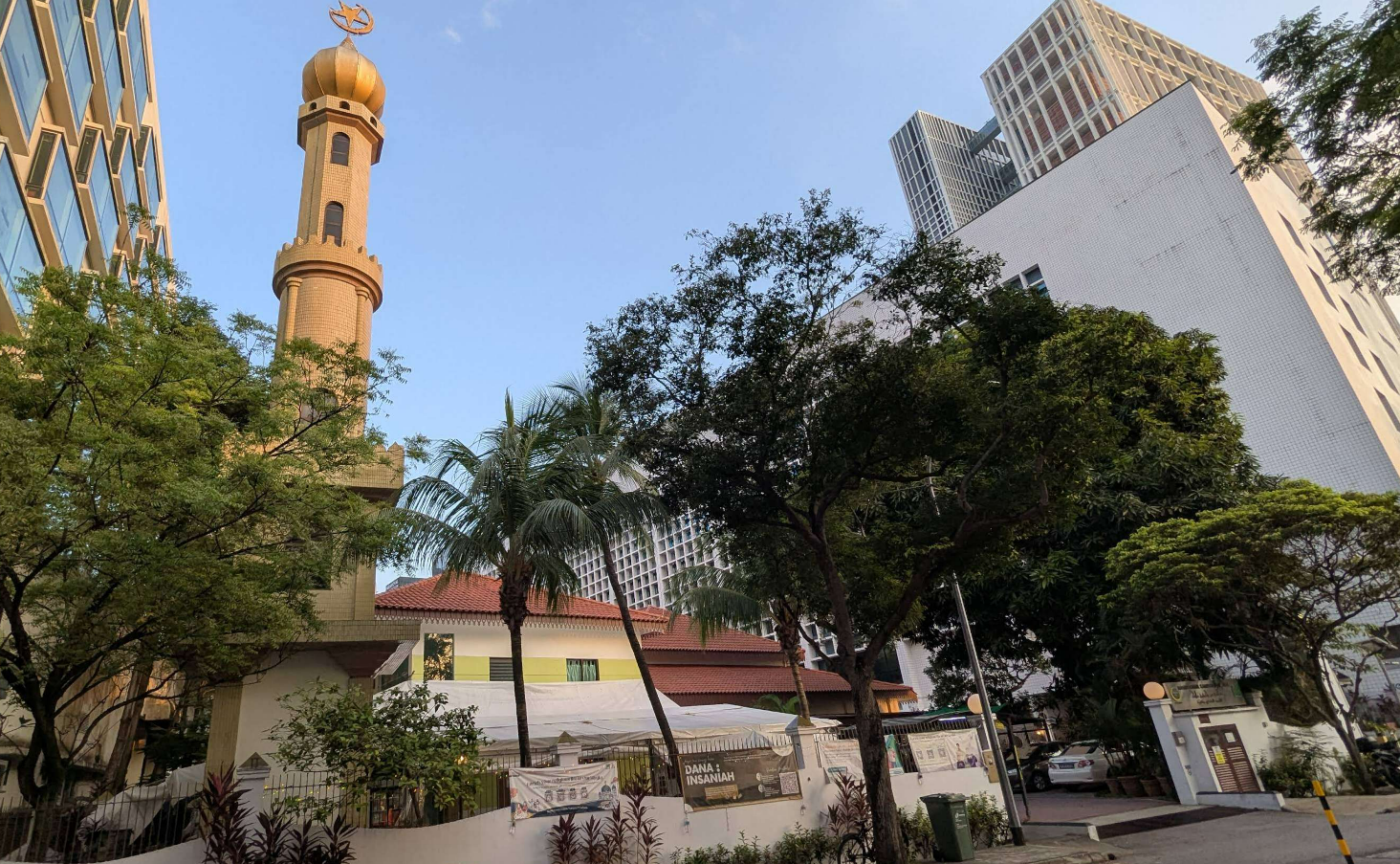
Masjid Omar Kampong Melaka
Arab Merchants
The first wakaf in Singapore, established in 1820, was Wakaf Masjid Omar Kampong Melaka along the Singapore River, donated by Syed Omar Ali Aljunied, an Indonesian trader of Yemeni origin.
He also founded Wakaf Bencoolen, comprising Masjid Bencoolen and properties along Bencoolen Street. Rich Yemeni merchants continued this tradition.
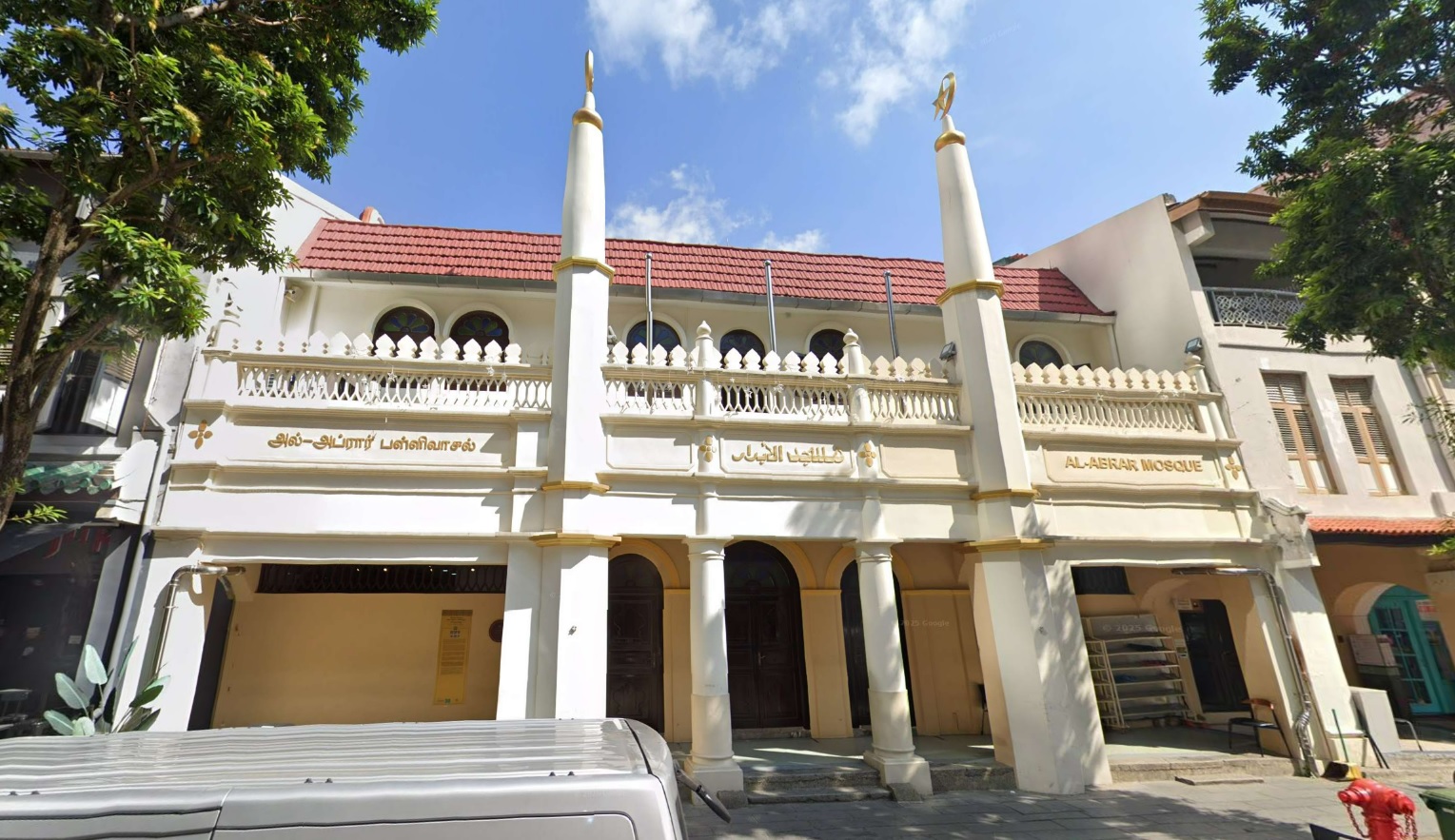
Masjid Al Abrar
Indian Traders
Indian traders and money changers contributed to Wakaf in Singapore by establishing endowment properties like Masjid Jamae (1826) and Masjid Al-Abrar (1827) under Wakaf Jamae.
Ahna Ally Mohammad Kassim, another Indian trader, established Wakaf Kassim, which includes Masjid Kassim and land along Changi Road.
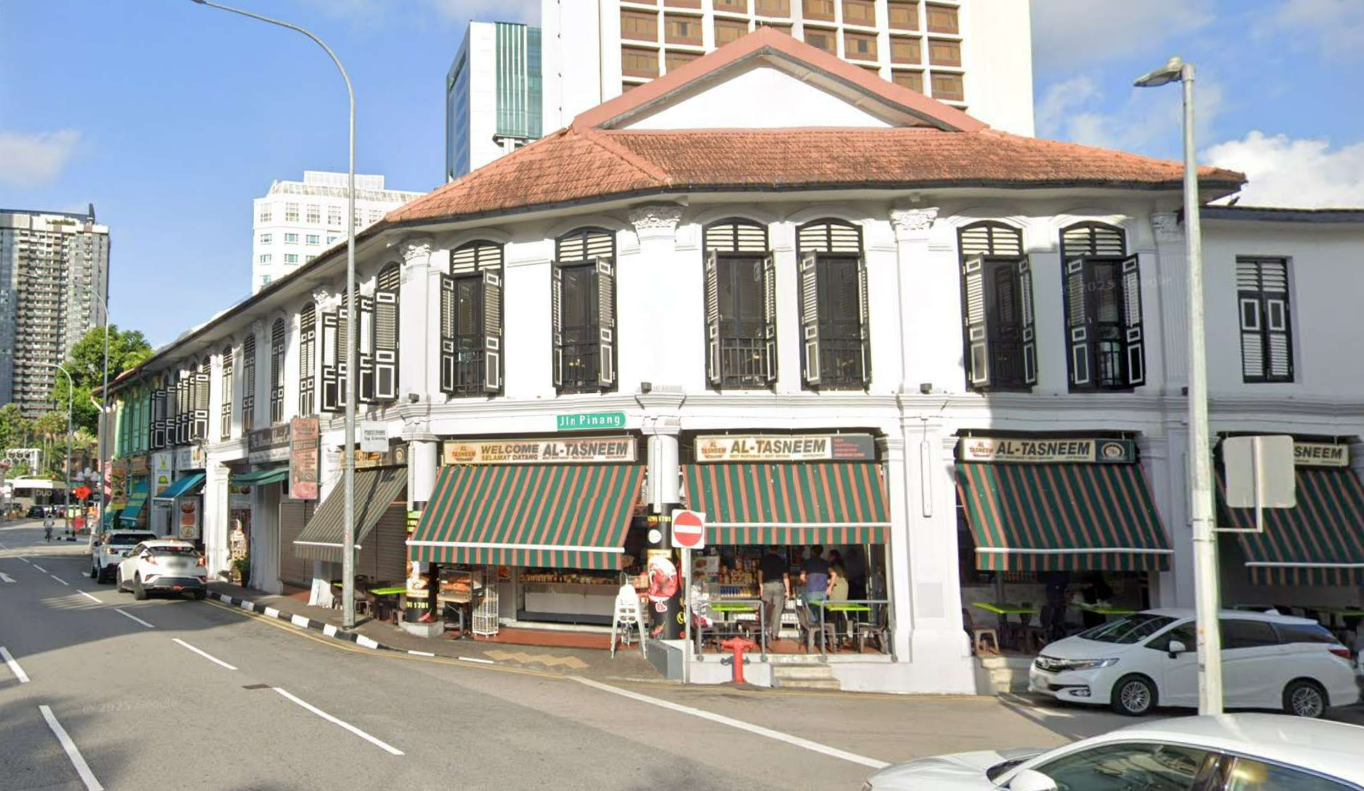
North Bridge Road
Nusantara Landowners
Wealthy landowners, merchants, and their descendants in the Malay Archipelago established Wakaf in Singapore, fueled by trade-generated prosperity. Notably, Bugis women like Raja Siti Kraeng Chanda Pulih and Hajjah Daeng Tahira Bte Daeng Tadaleh created enduring Wakaf, still benefiting their designated recipients.
Their initiatives highlight the economic influence of women in that era. Remarkably, around one-third of Singapore’s Wakaf originated from female donors, underscoring their significant role in shaping societal welfare and religious endowments.